🏡 BUYER'S GUIDE · Flood zones explained
What Does Flood Zone X Mean for a Home Buyer?
The listing looked perfect until one short line stopped you: "Flood Zone: X." If you are asking what does flood zone X mean, the honest answer is better than most buyers fear — but not as simple as "you're safe." Zone X means FEMA places the property in a lower-risk area outside the Special Flood Hazard Area. It does not mean the ground can never get wet, and it does not settle what you should do about insurance.
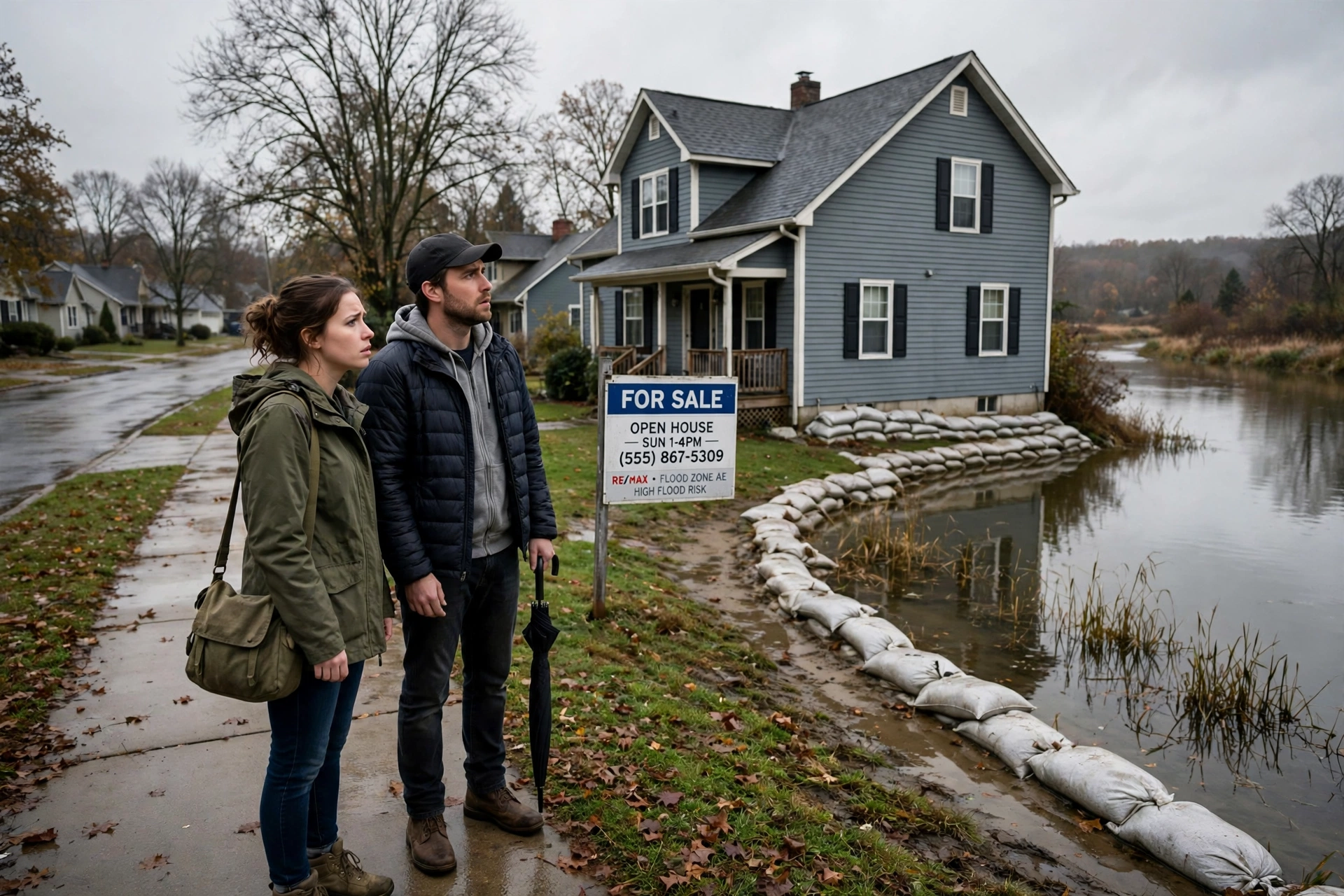
Check any address — free, plain English
FloodLens reads FEMA's official flood map for the address: the zone letter, what it means in plain words, and the "data as of" date. Free, no account.
🔍 Check an address free →Insurers and lenders already priced this street's zone — see it first.
The letter on the listing is doing a lot of quiet work
Sellers drop a zone letter into a listing as if it explains itself. It does not. That letter affects whether a lender will require flood insurance, what the house really costs each month, and whether you ask the next questions — about elevation, past claims, and distance to water.
Buyers swing between two mistakes with Zone X: panicking and walking away from a reasonable house, or relaxing completely and never thinking about water again. Both skip what matters — which version of X the property is in. Checking it early turns a late surprise into a fact you can act on.
What does flood zone X mean, in plain words?
On FEMA's flood maps, Zone X describes areas of lower flood hazard outside the Special Flood Hazard Area — the high-risk area where, as FloodLens explains, a federally backed mortgage requires flood insurance. FEMA uses the label in two forms:
- Unshaded Zone X is the lower-risk form: minimal flood hazard, outside both the high-risk area and the area FEMA maps for the 0.2% annual-chance flood.
- Shaded Zone X sits in between: moderate flood hazard, between the limits of the 1% annual-chance flood and the 0.2% annual-chance flood.
Neither form is in the Special Flood Hazard Area. That is the practical line: inside it, zones such as AE carry a lender insurance requirement; outside it, that requirement usually falls away — but rain falls outside map lines, so a property near a creek or a low road can still take water.
FloodLens makes that point in its sample report: a meaningful share of National Flood Insurance Program claims come from outside high-risk zones, so "not in a flood zone" is not "no flood risk." X is a statement about relative risk on FEMA's maps, not a guarantee about your basement.
What Zone X changes — and what it does not
Your mortgage. Because Zone X is outside the Special Flood Hazard Area, a federally backed lender will not usually require flood insurance as a condition of the loan — real money saved compared with a high-risk zone. Your lender makes the final call, so confirm it with them.
Your choice about insurance. "Not required" and "not worth having" are different questions. In Zone X you choose, based on the property: how close is water, and is there a finished basement you cannot afford to lose? FloodLens is an informational lookup, not insurance advice, and its premium figures are estimates, not quotes. For a real price, it points you to floodsmart.gov or your own agent.
Your questions for the seller. Zone X means calmer questions, not none. Has the property ever taken water or filed a claim? Claims history follows the property, as FloodLens notes. Is there an elevation certificate on file? Any Letters of Map Change affecting this lot?
How FloodLens checks the zone for you
FEMA's maps are public, but as FloodLens says on its homepage, they are also hard to read: panel numbers and shaded polygons that never translate themselves into dollars or next steps. FloodLens reads FEMA's National Flood Hazard Layer — the same public dataset behind FEMA's own Map Service Center — and returns the result in plain words:
- Type any U.S. address on FloodLens. No account. The zone letter, plain-words risk level, and data vintage are free forever and never paywalled. If FEMA has no data for a location, it says so rather than guessing.
- Read the decoded result: the zone explained, whether insurance is required with a federally backed mortgage, and when the data was checked.
- Go deeper only if you need to. The paid report is a 10-page PDF for your exact address for $9: what the zone means, the typical insurance cost range, renewal math under FEMA's Risk Rating 2.0, how the zone changed over time, and questions for your agent. Comparing houses? A 3-property pack is $39, side by side. See the report and pricing and checking a flood zone before buying.
One boundary the site states clearly: FloodLens is not an official flood determination and does not replace the Standard Flood Hazard Determination Form your lender or insurer requires.
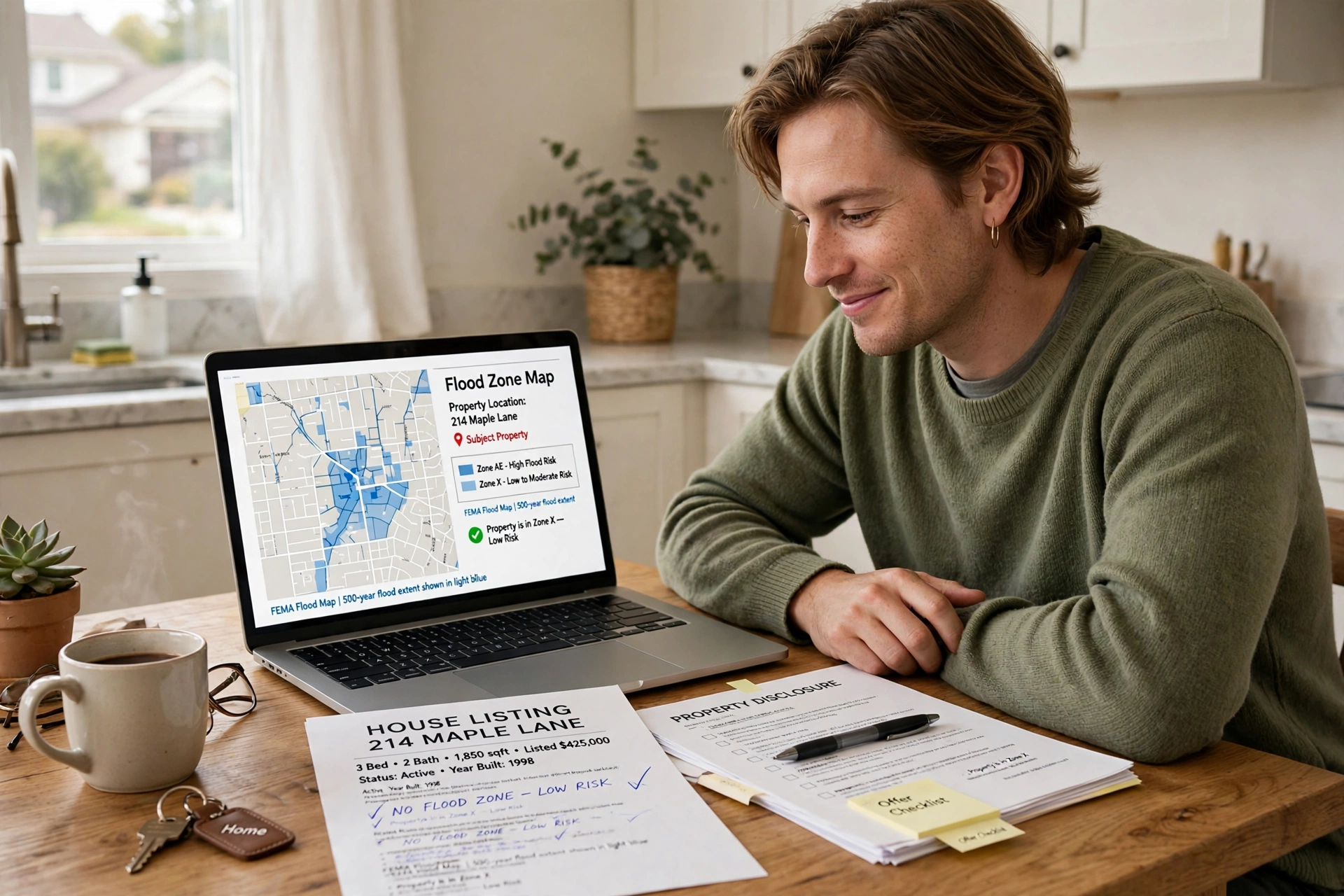
Want this address fully decoded?
The zone letter is the start, not the answer. The FloodLens report explains what the zone means for this specific address, the typical insurance cost range for the zone, how the designation has changed over time, and the questions worth putting to your agent and insurer — in a printable 10-page PDF.
Get the $9 report →10-page PDF: typical insurance cost ranges, zone history, and the questions to ask your agent. Not an official flood determination.
A worked example: two finalists, one letter apart
Here is an example — not a real customer, just a realistic Saturday. A couple narrows their search to two similar houses: House A in Zone AE, House B in Zone X, unshaded.
They look up both addresses free before their second tour. House A comes back high risk: insurance required with a federally backed mortgage, and FloodLens's sample figures for Zone AE put typical cost at roughly $800–$2,000 a year as an estimate for a $250,000 building-coverage policy — money that belongs in their budget from day one. House B comes back Zone X: no lender requirement expected, and optional coverage can be decided calmly, after a real quote.
Neither result decides for them — House A might still be worth it. But the two houses no longer cost the same, and they know it before they bid.
Who this check is for — and who it is not for
It is for you if you are buying or selling a U.S. property with an unexplained zone letter in the listing, comparing two or three houses side by side, or trying to understand why your lender mentioned flood insurance.
It is not for you if you need the certified determination your lender or insurer requires — no lookup replaces that form — or an exact premium quote, which belongs with an insurer or floodsmart.gov. If FEMA has no mapped data for an unstudied address, FloodLens will say so; FEMA's Map Service Center is your next step. If a map status seems wrong, the LOMA process guide explains how map changes work.
Frequently asked questions
Does flood zone X mean I don't need flood insurance?
It means a federally backed lender will not usually require it, because Zone X is outside the Special Flood Hazard Area. Whether to carry it anyway is your choice, based on distance to water and what you would lose. "Not required" is a lending rule, not a promise about water.
What is the difference between shaded and unshaded Zone X?
Unshaded Zone X is the minimal-hazard form, outside the mapped 0.2% annual-chance area as well as the high-risk area. Shaded Zone X is moderate hazard, between the 1% and 0.2% limits. Both sit outside the Special Flood Hazard Area, but shaded X is where getting a quote makes most sense.
Can a flood zone change after I buy?
Yes. FEMA updates its maps, and lots can be affected by Letters of Map Change. The FloodLens paid report includes how the zone for your address changed over time.
Is the FloodLens lookup really free?
Yes — the zone letter, plain-words risk level, and data vintage are free, with no account, and never paywalled. The optional upgrade is the $9 report for one address, or the $39 pack for three.
Is a FloodLens result an official determination?
No. It is an informational lookup using FEMA's National Flood Hazard Layer, not a certified determination and not a replacement for the form your lender or insurer requires.
Check the letter before you fall for the house
If a listing says Zone X, you now know the claim: lower risk on FEMA's maps, outside the high-risk area, usually no lender-required insurance. Confirm it for the actual address — not the street, not the neighborhood, the address.
Run the free lookup on FloodLens and decide with the full cost picture in front of you. If the result raises questions, the $9 report puts the cost range, map history, and questions for your agent into one printable PDF.
FloodLens is informational only — not an official flood determination, not insurance, and not lending or legal advice. FEMA's Flood Map Service Center and your insurance agent are the authorities for a specific property.